- Home
- Blog Articles
- Who Created Jardin Majorelle? The History of Marrakech’s Iconic Garden
- 26 August 2025
- 1806 Views
- General
- Jacques Majorelle, Jardin Majorelle history, Marrakech landmarks, Yves Saint Laurent,
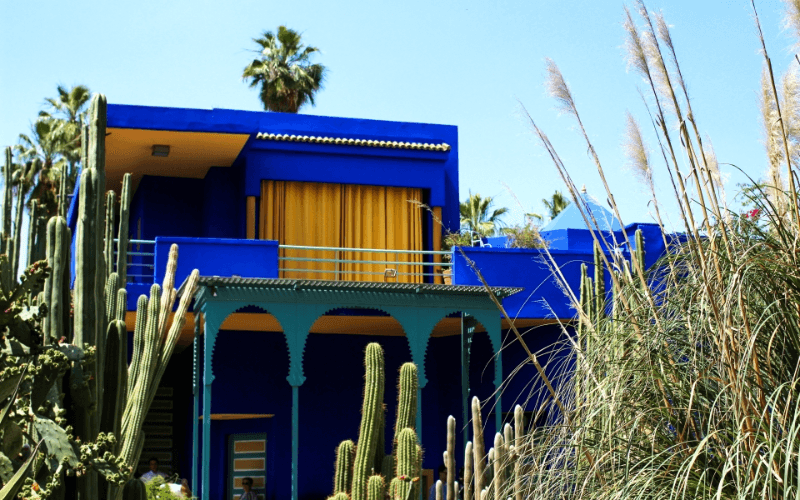
Jardin Majorelle is famous for its exotic plants, vivid blue architecture, and peaceful atmosphere, but its history is just as fascinating as the garden itself. What began as the private garden of French painter Jacques Majorelle in the 1920s later became closely connected with Yves Saint Laurent and Pierre Bergé, who helped save the property from development in 1980.
Today, Jardin Majorelle is one of Marrakech’s most recognisable landmarks, bringing together art, architecture, botanical collections, and fashion history in one remarkable setting. Whether you want to explore its artistic roots or secure your Jardin Majorelle tickets before your visit, here is the complete history of how this living masterpiece came to be.
Who Created Jardin Majorelle?
French Orientalist painter Jacques Majorelle created Jardin Majorelle. After discovering Morocco and becoming fascinated by Marrakech, he decided to make the city his home.
In 1924, Majorelle acquired land on the edge of Marrakech’s Palmeraie and began developing a private garden around his residence. What started as a personal project gradually grew into an ambitious botanical collection containing plants from different parts of the world.
Over the following decades, Majorelle continued expanding and shaping the garden, combining his passion for plants with his artistic approach to colour, architecture, and landscape design.
Why Did Jacques Majorelle Create the Garden?
Jacques Majorelle did not intend to create an ordinary public park. He saw the garden as an extension of his artistic work, a living canvas where plants, architecture, colour, and light could exist together.
He introduced exotic species including cacti, agaves, bamboo, palms, and water plants, creating a series of contrasting landscapes throughout the property.
In 1931, architect Paul Sinoir designed the distinctive Cubist-inspired villa that became one of the garden’s most recognisable architectural features. Majorelle later introduced the intense blue that would become synonymous with the property, creating a striking contrast with the surrounding greenery and Marrakech’s bright sunlight.
The garden eventually opened to the public in 1947, allowing visitors to experience the botanical world Majorelle had spent decades creating.
What Happened to Jardin Majorelle After Jacques Majorelle?
Jacques Majorelle died in 1962, and the garden subsequently entered a period of decline. Maintaining such an extensive botanical collection was difficult, and the property gradually lost some of its former condition.
By the late 1970s, the future of Jardin Majorelle was uncertain. Plans were made to develop the site, putting the historic garden at risk of being destroyed.
This marked the beginning of one of the most important chapters in its history.
How Did Yves Saint Laurent Save Jardin Majorelle?
Yves Saint Laurent and Pierre Bergé first discovered Marrakech in 1966 and developed a lasting connection with the city. Over time, they became closely connected with Jardin Majorelle and followed the growing threat of redevelopment.
In 1980, they purchased the garden to prevent it from being destroyed and began an extensive restoration project.
Their work helped preserve the garden’s distinctive architecture, botanical collections, pathways, fountains, and characteristic blue structures. Rather than replacing Jacques Majorelle’s original vision, they worked to protect and maintain the atmosphere that made the garden unique.
Yves Saint Laurent also maintained a strong personal connection with Marrakech throughout his career, often drawing inspiration from the city's colours, landscapes, and atmosphere.
Are Yves Saint Laurent’s Ashes in Jardin Majorelle?
Yes. Following his death in Paris in 2008, Yves Saint Laurent's connection with the garden was forever preserved when his ashes were scattered in the rose garden of Jardin Majorelle, as he had requested.
A memorial dedicated to the designer stands within the garden, marking the important role Marrakech and Jardin Majorelle played in his life and creative work.
For visitors interested in his relationship with the city, the Musée Yves Saint Laurent Marrakech, located next to Jardin Majorelle, offers a deeper look at his work and legacy.
What Is the Berber Museum Inside Jardin Majorelle?
Another important part of Jardin Majorelle’s history is the Berber Museum (Musée Pierre Bergé des Arts Berbères).
The museum occupies Jacques Majorelle’s former painting studio and was inaugurated in 2011 by Pierre Bergé. Its collection celebrates the artistic traditions and cultural heritage of Morocco’s Amazigh people.
More than 600 objects are displayed, including jewellery, textiles, clothing, leatherwork, and other traditional pieces from different regions of Morocco.
The museum adds an important cultural dimension to a visit to Jardin Majorelle, allowing visitors to explore both the garden’s artistic environment and Morocco’s rich Amazigh heritage.
Can You Buy Tickets at the Entrance of Jardin Majorelle?
Today, Jardin Majorelle welcomes visitors through a timed-entry system, so it is important to organise your visit before arriving. Tickets should be booked online in advance, and on-site ticket sales are not available at the garden entrance.
Booking ahead allows you to secure your preferred visiting time, particularly during busy periods when popular slots can fill up.
- 🎟️ Jardin Majorelle Tickets – Reserve your timed entry and explore the garden’s botanical collections, architecture, and famous blue pathways.
- 🎫 Jardin Majorelle & YSL Museum Combo Ticket – Combine your visit to the garden with the Musée Yves Saint Laurent Marrakech.
Continue Planning Your Majorelle Garden Visit
Planning to visit Jardin Majorelle? These guides can help you organise the rest of your experience:
- Majorelle Garden Tickets – Reserve your timed entry to explore the botanical garden, its plant collections, and outdoor pathways.
- Majorelle Garden Opening Hours – Check current opening times and seasonal schedules.
- Majorelle Blue – Discover the story behind the garden’s most recognisable colour.
Jardin Majorelle is more than a beautiful botanical garden. Its story connects Jacques Majorelle’s artistic vision, Yves Saint Laurent and Pierre Bergé’s preservation efforts, Morocco’s botanical heritage, and the cultural history of Marrakech.
Walking through its blue-painted pathways today means experiencing a place that has evolved for more than a century while retaining the artistic identity that made it special in the first place.